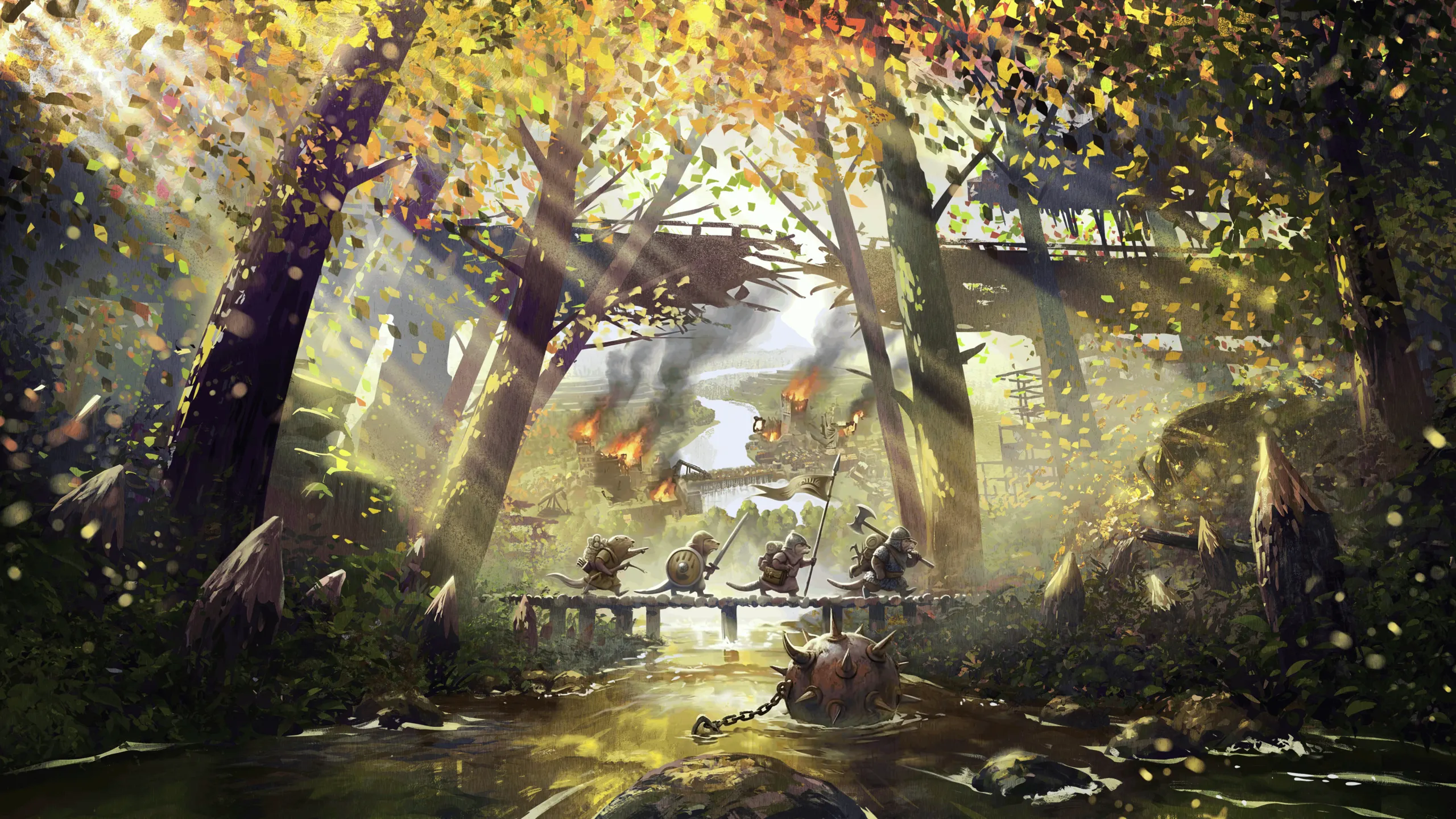

AI opponents are players run by the game. They’re rules written for the game, no language model or machine learning. You can play against them alone, or fill a PvP or Horde game you host with them alongside the people who join. They’re in beta and not very smart yet.
They play by your rules. They only see what their own fog of war shows them, and they build with what their beavers gather.
Adding them
On the New Game screens’ last page, click Customize: AI opponents is the last setting under Timber Empires. Set how many you want, up to three, and a difficulty for each. It shows in PvP and Horde games, alone or hosted.
AI opponents need BeaverBuddies Co-Op/PvP Edition, even in a game alone. Without it the setting doesn’t show.
Founding
Everyone founds their own settlement, the way they do in a matched game: you place your first District Center anywhere, and it’s built at once, with the beavers, food and water the game’s difficulty starts you with.
The AIs found when the host first unpauses the game, one after the other, each as far as it can get from everyone else, on open ground by clean water with trees and berry bushes around. The bandit camps go in after all of them.
Factions. AIs play Folktails or Iron Teeth. In a game alone they play your faction, so a game whose faction comes from another mod gets no AIs. In a game with others they take turns, so both factions are in the game.
Difficulty
| Easy | Normal | Hard | |
|---|---|---|---|
| How often it acts | Once an hour, one thing at a time | Every half hour, two things | Five times an hour, four things |
| Food and water it stores for a drought or badtide | 80% of its length, plus 3 days | 110% of its length, plus 5 days | 140% of its length, plus 7 days |
| Makes more food and water when stores drop below | About 3 days | About 5 days | About 7 days |
| Plans ahead | No, it reacts to what’s short | Yes | Yes |
| Army from | Around day 16 | Around day 10 | Around day 7 |
| Scouts | Never | From around day 8 | From around day 4 |
| Attacks with | About 10 troops | About 14 troops | About 18 troops |
| Walls and gatehouses | No | Yes | Yes |
| Troops it trains | A fixed mix | To beat what it has seen | To beat what it has seen |
| Pulls back from a losing fight | No | No | Yes |
Each AI also has leanings of its own: how soon it arms, how big an army it waits for, how eager it is to attack, the order it researches in, the crop it likes and where it tends to build. No two games play alike, but they never take it past what its difficulty knows to do.
How they play
Economy. Water, food and wood come first, then fields, storage, dams, power, research and homes. When food or water runs low, or a drought is close and it can’t store enough, it works its beavers longer hours.
Defense. Watchtowers out toward trouble, to see it coming and claim the land around them, and on Normal and Hard a Palisade around the core of its town with Gatehouses where its roads go out. Cliffs and water do the rest. Its troops come out against whatever comes into sight.
Attack. It trains troops at a Barracks and an Archery Range, scouts for the other players, and marches on a District Center it knows of once its army is big enough and, where it can see the defenders, strong enough. It plans its way around the walls it has seen, not the ones it hasn’t. Where the ground steps up, its troops put up Field Ladders.
Not yet. AIs stay in one district and don’t use district specializations, siege machines or monks. They don’t make alliances or trade: a proposal to an AI goes unanswered.
Saves and hosting
The host’s game runs the AIs. Whoever hosts a saved game runs them from then on.